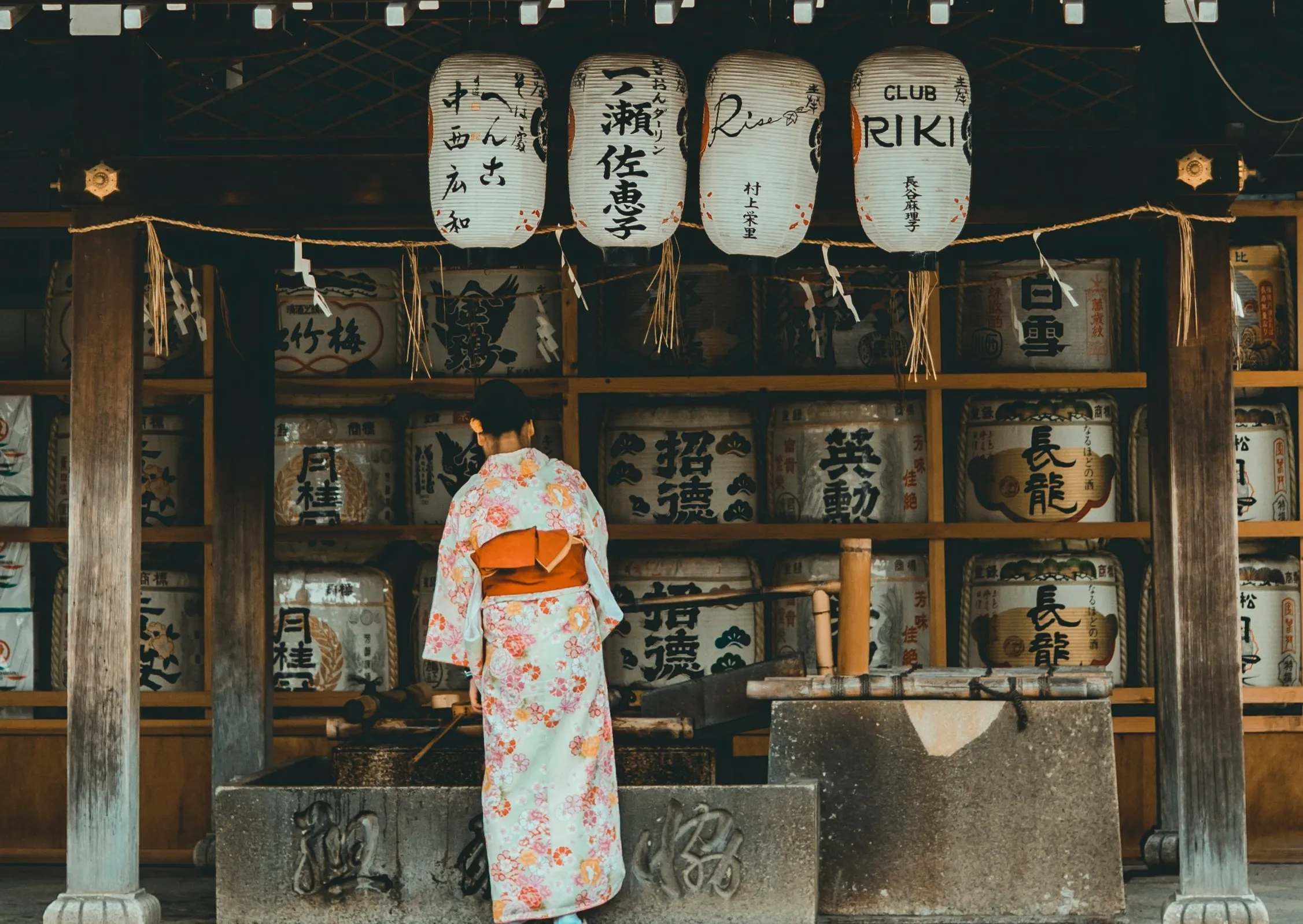
The tea ceremony most visitors to Kyoto encounter is a performance — a demonstration staged for an audience, explained in English, photographed, concluded. The one we are describing has no audience, no explanation, and no photographs. It was conducted for two people by a master who does not, under ordinary circumstances, receive guests at all.
Chanoyu — the way of tea — is among the most refined of Japan's living traditions. At its highest level it is not a service or an attraction but a discipline practised over a lifetime, within lineages that trace back centuries. The practitioners who sit at the top of those lineages are not in the hospitality business. They teach a small number of students. They do not advertise, and there is no channel through which an outsider can simply request their time.
This is the distinction that matters, and it is easy to miss. Kyoto offers a great deal of tea — in temples, in gardens, in rooms set aside for visitors. What it does not openly offer is an hour inside the practice as it is actually kept, conducted by someone for whom it is the work of a life. That hour is not for sale. It is extended, rarely, to those who are introduced and understood.
What an introduction requires
I have lived in and around Kyoto for most of my working life, and I have spent years within the circles where these traditions are kept — not as a guide arranging visits, but as someone known to the families and houses that practise them. That standing is the only currency that matters here. It cannot be bought, and it cannot be hurried.
When we arrange something like this, the request does not begin with the client. It begins with a conversation between people who know one another, in which the question is not whether the fee is sufficient but whether the guests will understand what they are being given. The master must be willing. The willingness is everything, and it is never assumed.
"What Kyoto does not openly offer is an hour inside the practice as it is actually kept, conducted by someone for whom it is the work of a life. That hour is not for sale. It is extended, rarely, to those who are understood."
There are conditions, and they are not negotiable. No photography during the ceremony. A small number of guests — two, occasionally four, never more. An openness to silence, and to not understanding everything that is happening, which is itself part of the point. These are not restrictions imposed to create exclusivity. They are the conditions under which the thing can occur at all.
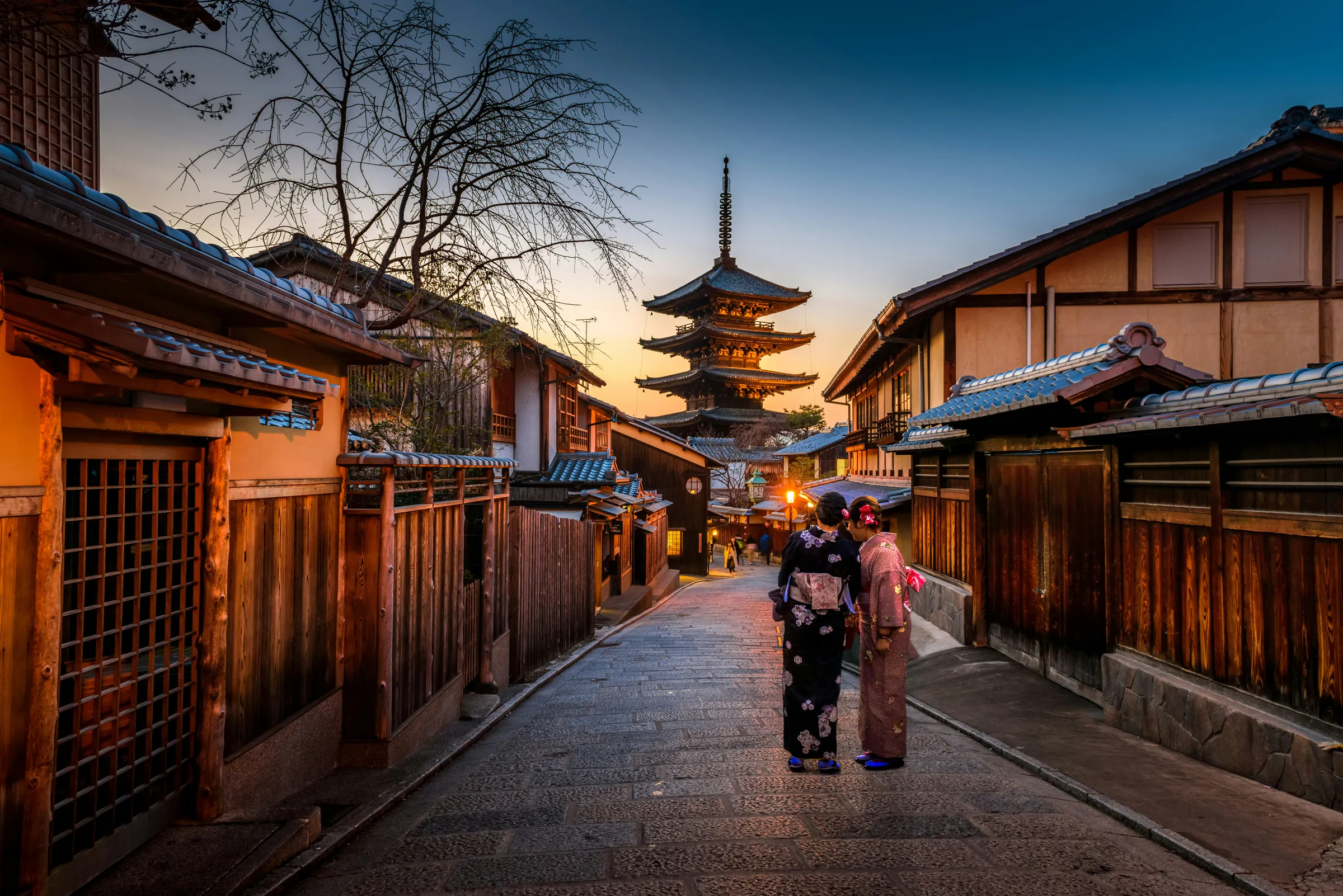
Kyoto in the off-hours — the city the morning before it opens to anyone else
The morning itself
The guests — a couple who had travelled in Japan before and wanted, this time, to go further inward rather than further afield — arrived at a small tea house before the surrounding temple complex had opened to the public. The hour was deliberate. The light was still low and grey, the gravel of the garden freshly raked, the air cold enough to see.
They removed their shoes and entered through a doorway built low on purpose, so that everyone who passes through it must bow. Inside, the room was nearly bare — a scroll, a single arrangement of flowers, the fire, the implements. The master received them without ceremony of greeting and began. For the better part of an hour there was almost no speech. The kettle, the water, the precise and unhurried movements, the sound of the whisk. The couple later said it was the quietest they had been, awake, in years.
What is difficult to convey is that nothing dramatic happened, and that this was the whole of its power. There was no spectacle to photograph and nothing to recount as an anecdote. There was a bowl of tea, prepared with complete attention and received the same way, in a room where for an hour nothing else in the world was permitted to intrude.
"Nothing dramatic happened, and that was the whole of its power. There was a bowl of tea, prepared with complete attention and received the same way, in a room where for an hour nothing else was permitted to intrude."
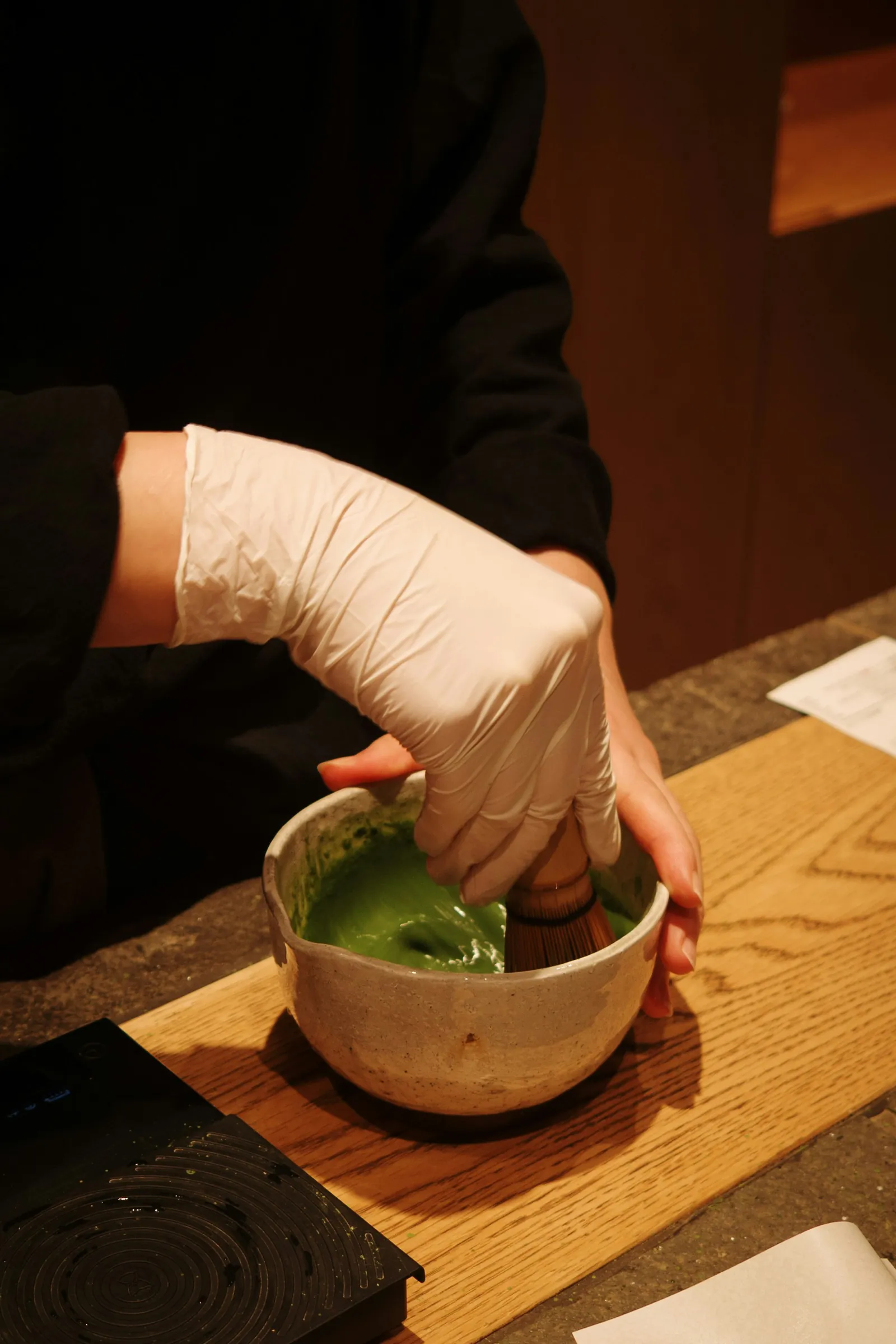
A single bowl, prepared with complete attention — the form unchanged in centuries
Beyond the tea room
The ceremony is the example, but the principle runs through everything we arrange in Japan, where so much of what is most worth reaching sits behind a deliberate reticence. The temple sub-temples ordinarily closed to visitors, opened at an hour when no one else is present. The artisan — a swordsmith, a maker of urushi lacquer, a master of a craft with a handful of living practitioners — who will receive a guest in the workshop but never as a tour. The garden best seen, by arrangement, before the gates open.
In each case the structure is the same as the tea room. The thing exists. It is simply not available through the front door, because the people who keep it are not in the business of being visited. What changes that is being introduced, correctly, by someone they already trust — and arriving in a way that honours what is being shown.
If the Japan you have in mind is the one beneath the surface — quieter, slower, and kept by people who do not ordinarily open their doors — the right starting point is a conversation.
Arrange something like this
A practice, a place, a quiet you've been looking for —
tell us what you have in mind.