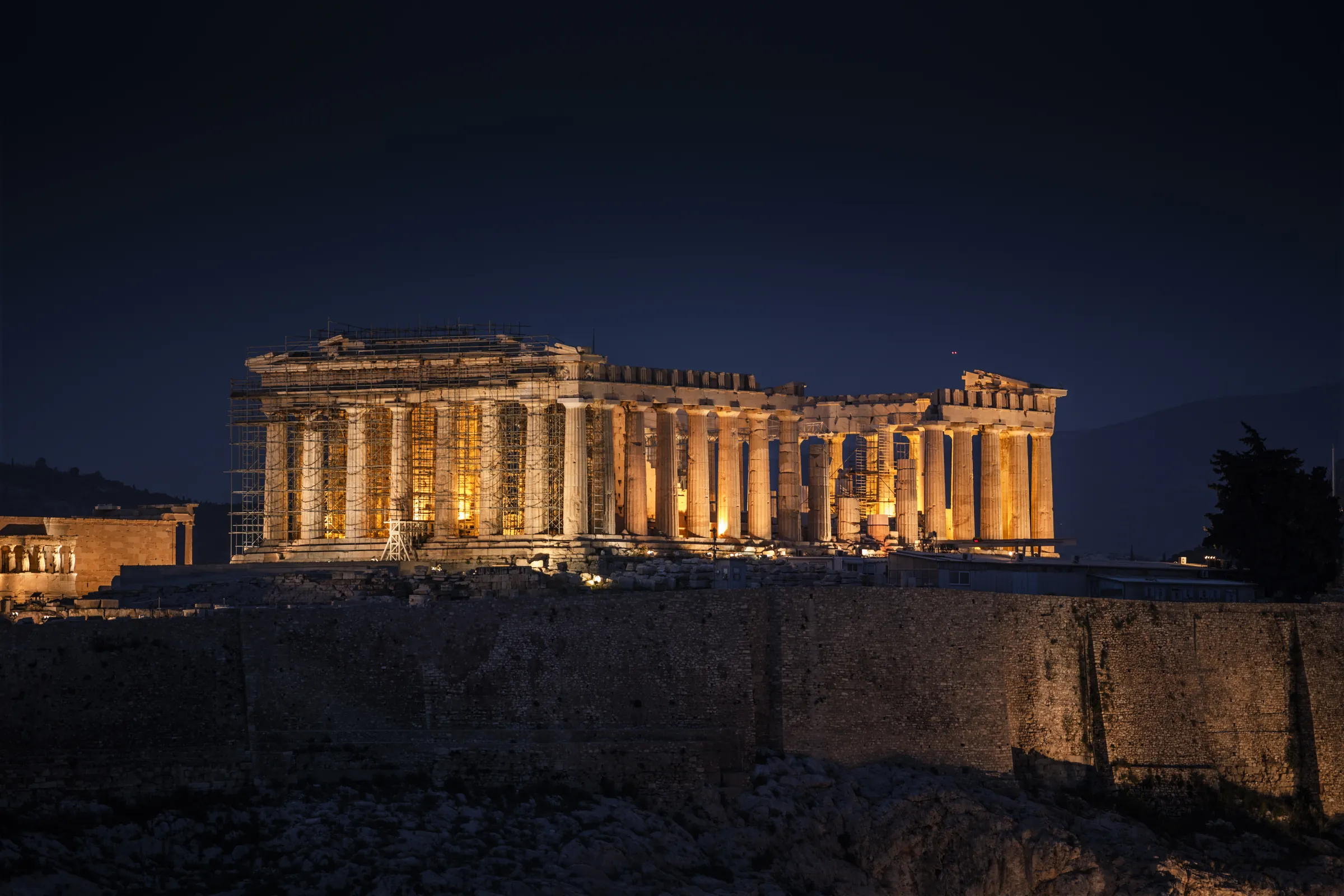
A client asked us whether it would be possible to have dinner at the Acropolis. Not near it. Not with a view of it. At it — tables set among the columns, the site closed, the city below, and no other guests. We said we would find out.
The request came from a family who had visited Greece several times. They had done the obvious things well — the right islands, the right properties, the right restaurants. What they were looking for now was something that could not be found through a search, a concierge, or a travel magazine. They were not entirely sure it was possible. Neither were we.
The Acropolis is a UNESCO World Heritage Site. It is managed by the Central Archaeological Council of Greece and the Greek Ministry of Culture. Public access closes at a fixed hour each evening. The site does not accept private event bookings through any standard channel — not for individuals, not for corporations, not for state functions. This is the starting position.
What it actually takes
The path to making something like this happen is not a form, a fee, or a vendor relationship. It is a conversation with someone who has the institutional standing to initiate the discussion at the right level — and the existing trust with those decision-makers to have that conversation taken seriously.
Kostas has spent years building relationships within Greece's cultural and governmental institutions. Several of those relationships sit at precisely the level this kind of request requires. The approach was direct, handled through those channels, and framed correctly — not as a commercial request but as a private cultural occasion for a family with genuine connection to and regard for Greece as a place.
"The site does not accept private event bookings through any standard channel. The path is not a form, a fee, or a vendor relationship. It is a conversation with someone who has the institutional standing to initiate the discussion at the right level."
The process took several weeks. There were conditions — the family would need to observe specific protocols regarding the preservation of the site, the evening would be structured within strict parameters, and the catering and service elements would need to be coordinated with additional approvals. None of these conditions were obstacles. They were part of the arrangement.
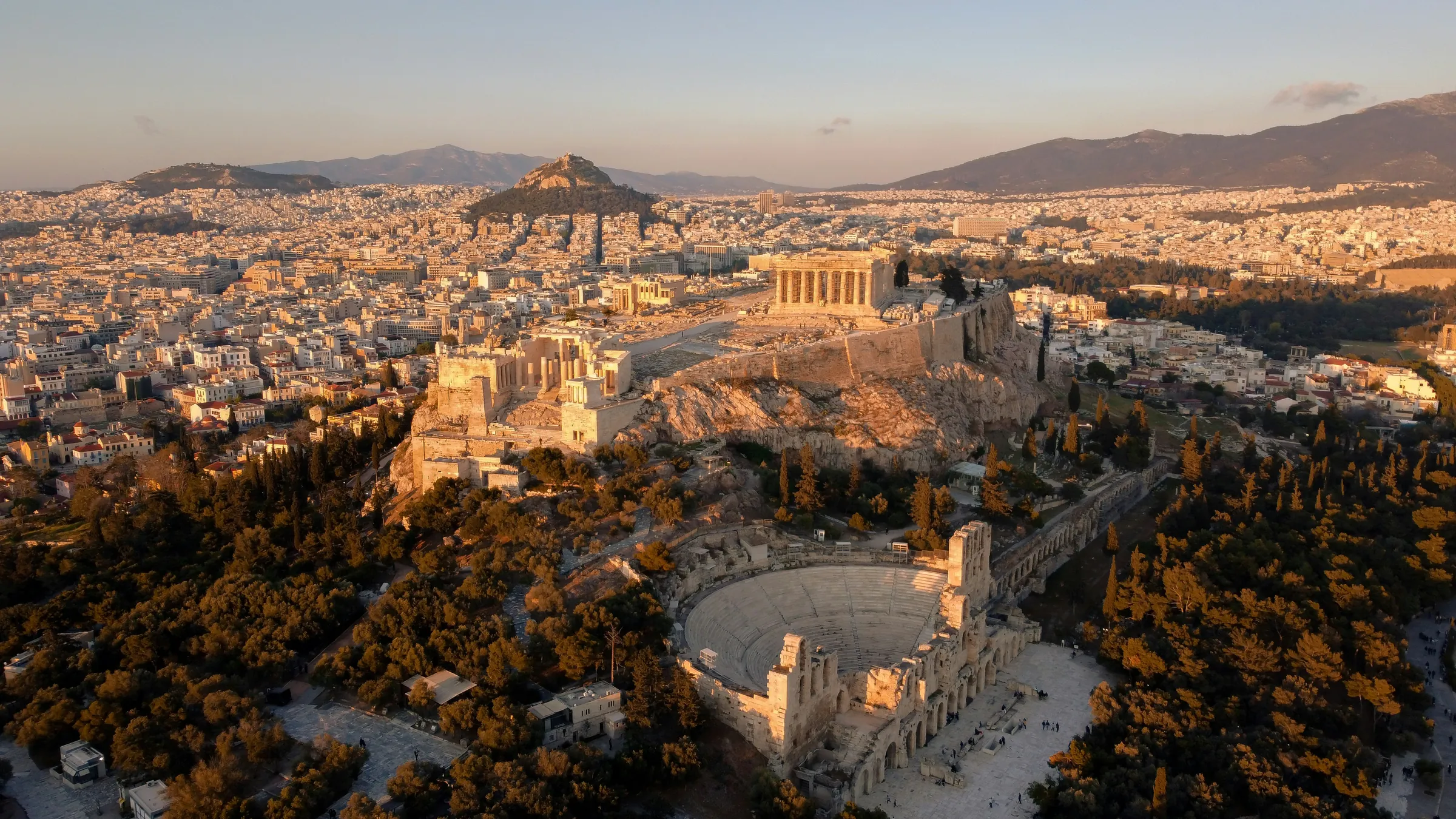
Athens from above — the city that surrounds the hill
The evening itself
The family arrived at the Acropolis as public access was closing. The last visitors were departing as they entered. By the time the gates were secured behind them, the hill was theirs.
Tables had been set on the plateau facing the Parthenon — close enough to see the texture of the marble, far enough to take the full scale of it in. The light at that hour in Athens does something particular to ancient stone: the columns turn a colour that photographs almost never capture accurately, somewhere between amber and a very pale rose, and the shadows they cast across the ground move slowly as the sun descends.
The dinner itself was prepared by a chef whose kitchen we know well — food that reflected the region without being theatrical about it. The service was unobtrusive. The family ate, they talked, they walked between the columns after the meal. One of the children, who was eleven, sat with her back against one of the Parthenon's drums and looked out over the city for a long time without saying anything.
"By the time the gates were secured behind them, the hill was theirs. Tables had been set facing the Parthenon — close enough to see the texture of the marble, far enough to take the full scale of it in."
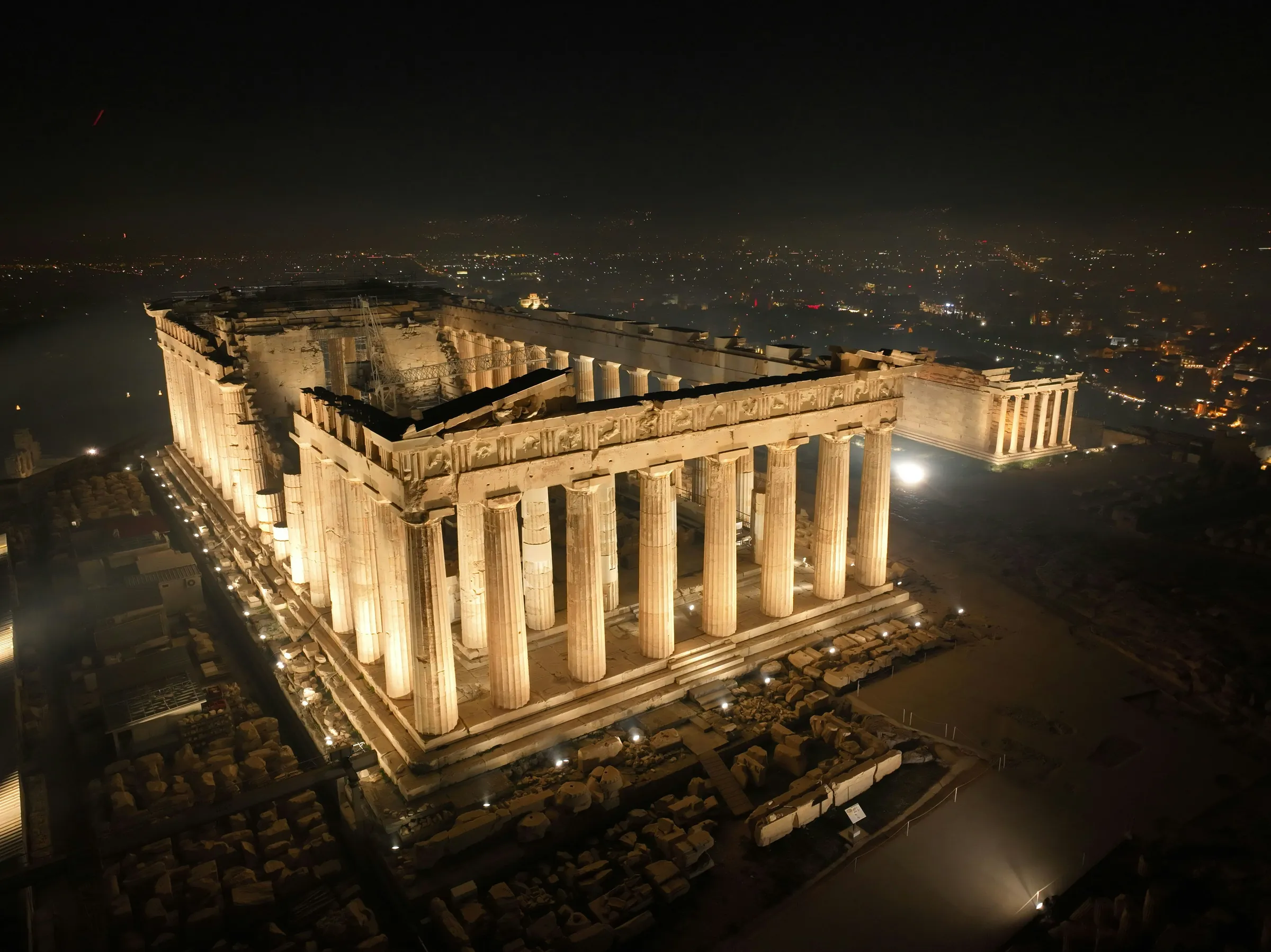
A private setting — the quality of arrangement that requires no announcement
What this means for other requests
We are telling this story not to suggest that every client can replicate it — the specific circumstances, relationships, and timing that made it possible are not a formula — but to give an honest account of what becomes available when the right relationships exist and a request is handled correctly.
The question we are most often asked after describing this evening is some version of: what else is possible? The answer is that we do not know in advance. We find out by asking the right people in the right way. Some requests that seem impossible turn out to have a path. Some that seem straightforward do not. The only way to know is to try.
If you have something specific in mind — a place, a moment, an idea that seems unlikely — the right starting point is a conversation.
Arrange something like this
If you have an experience in mind —
however particular — tell us.